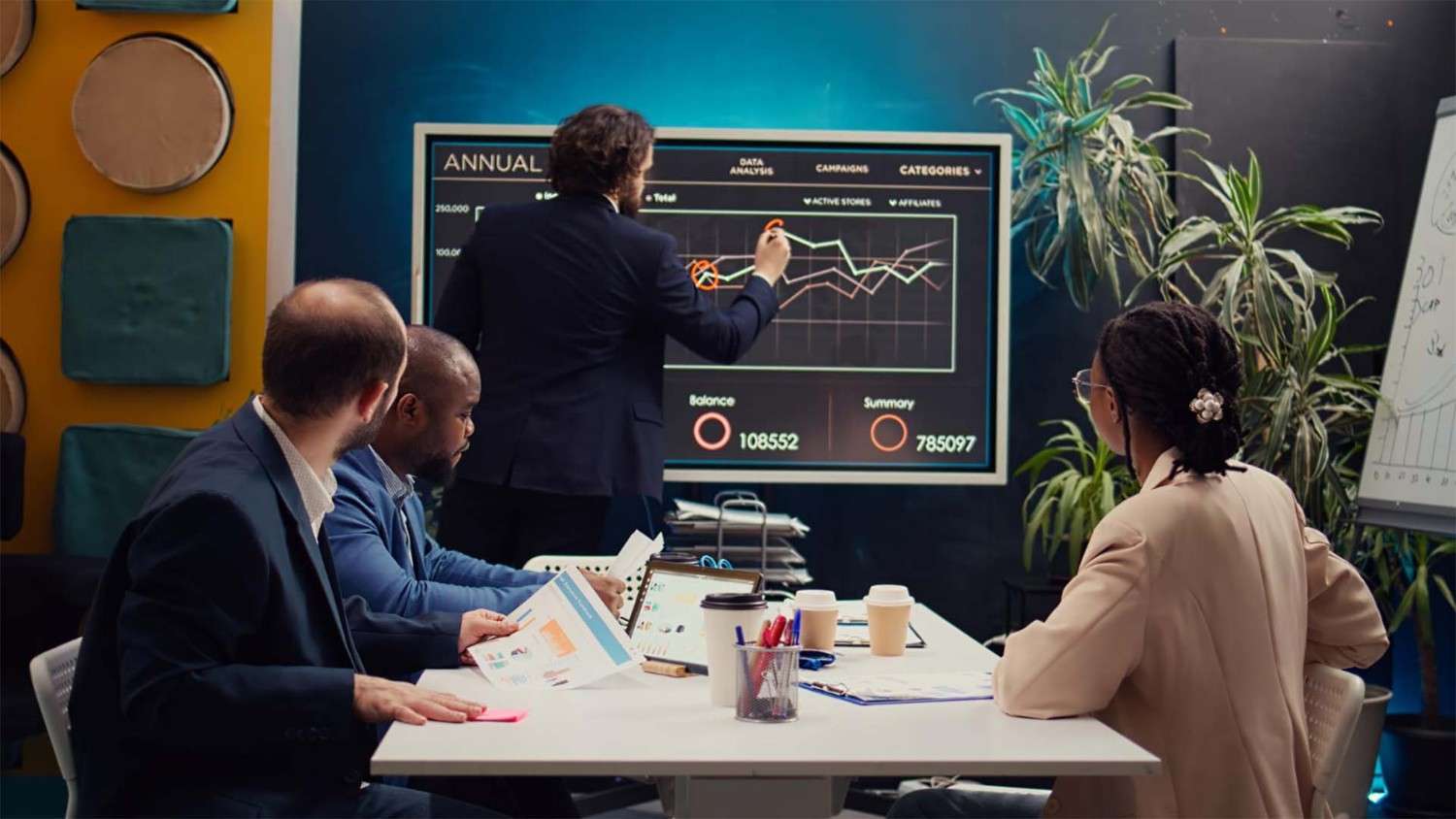
An AV system can have the latest displays, high-quality cameras and advanced control features, yet still fail to deliver a good meeting experience.
Employees struggle to connect their devices, remote participants cannot hear clearly, and simple presentations require technical assistance. The problem often starts before the first piece of equipment is purchased.
Investing in audio visual (AV) technology requires more than selecting hardware. Businesses need to understand how their spaces are used, how technology interacts with existing IT infrastructure, and what it will cost to maintain the system over time.
Without this planning, even a substantial investment can create operational challenges rather than solve them.
The most effective approach is to treat AV as business infrastructure. With the right audio visual consulting, organizations can evaluate their requirements, establish technical priorities and develop a system that supports communication, collaboration and long-term operational needs.
1. Start With the Business Problem, Not the Technology
New AV products often attract attention because of their impressive specifications. However, a product’s capabilities do not automatically translate into business value.
Before comparing equipment, identify the problems the investment should solve.
For example, a company experiencing poor hybrid meetings might assume it needs better cameras. The real issue could be inadequate microphone coverage, room echo, incorrect camera positioning or an unreliable network connection.
Replacing the camera alone would leave the underlying problem unresolved.
Similarly, a training facility may need interactive displays and centralized content distribution, while an executive boardroom may prioritize confidential discussions, consistent video conferencing and simple one-touch operation.
Start by documenting:
- The activities each space must support.
- The number of participants, including remote attendees.
- The frequency and duration of technology use.
- Existing communication and collaboration platforms.
- Current AV problems and their operational impact.
- The outcomes that would justify the investment.
These requirements form the foundation of the system design. They also give procurement teams objective criteria for comparing proposals instead of relying on equipment specifications alone.
2. Understand How the Room Affects AV Performance
AV performance depends on the relationship between technology, architecture and acoustics. A product that performs well in one environment may deliver disappointing results in another.
- Acoustics can matter more than microphone specifications
Hard flooring, glass walls, exposed ceilings and large uninterrupted surfaces can create reflections that make speech difficult to understand. In these environments, installing more sensitive microphones does not necessarily solve the problem.
Businesses should assess reverberation, background noise, microphone coverage and loudspeaker placement before finalizing the equipment selection.
Acoustic treatment, appropriate microphone technology and careful positioning can improve speech intelligibility without unnecessarily increasing system complexity.
- Display and camera placement affect participation
A display that looks impressive in a showroom may be difficult to read from the back of a conference room. Likewise, a camera positioned too low or too far from participants can create an unnatural experience for remote attendees.
Screen size, viewing distance, lighting, sightlines and seating arrangements should be considered together.
- Infrastructure must be planned early
Ceiling microphones, wall-mounted displays, motorized equipment and integrated control systems may require dedicated cabling, mounting provisions, power outlets and network connections.
Planning these requirements before construction or refurbishment is complete can reduce the need for disruptive modifications later.
This is where audio visual consulting helps connect room design decisions with practical technical requirements before they become expensive changes.
3. Evaluate Compatibility Before Approving Equipment
Commercial AV systems rarely operate in isolation. They interact with collaboration software, enterprise networks, laptops, room booking platforms, control interfaces and sometimes building management systems.
A system can contain individually capable products and still perform poorly when those products do not integrate properly.
Before approving a design, verify the following:
- Platform compatibility: Confirm that the proposed room system supports the organization’s chosen conferencing and collaboration platforms.
- Device connectivity: Check how employees will connect laptops and share content, including any wireless presentation requirements.
- Network readiness: Assess bandwidth, network configuration, traffic prioritization and the infrastructure required for networked AV.
- Control integration: Establish whether displays, audio, lighting and other supported systems need to work through a shared interface.
- IT security: Review device access, firmware updates, authentication, remote management and network segmentation requirements.
- Expansion requirements: Determine whether the design can accommodate additional rooms, displays or connected devices.
Networked AV can simplify signal distribution and centralized management, but it also introduces dependencies on network design, cybersecurity policies and IT support.
Involve IT, facilities, procurement and end users before the final specification is approved. This reduces the risk of discovering compatibility issues after installation.
4. Calculate the Total Cost of Ownership
The equipment quote is only one part of an AV investment. Installation, integration, software, maintenance and future replacement can materially affect the overall cost.
A useful budget should account for the full system lifecycle.
Businesses should compare proposals using the same scope and assumptions. A lower initial quote may exclude programming, acoustic work, training or ongoing support, making it difficult to compare fairly with a more complete proposal.
Consider a five-year ownership model. Estimate the initial project cost, recurring expenses, likely maintenance requirements and expected replacement needs.
Then compare these costs with measurable operational benefits, such as reduced meeting interruptions, fewer support requests or less time spent setting up presentations.
Avoid assuming that every AV investment will generate a guaranteed financial return. A credible business case should identify which outcomes can be measured and how they will be evaluated.
5. Design for Ease of Use, Not Just Technical Capability
A technically sophisticated AV system can become an operational burden if employees find it difficult to use.
Consider a meeting room that requires several remote controls, manual input selection and separate audio adjustments before a meeting can begin. Even if every component works correctly, the overall experience remains inefficient.
Good system design reduces the number of decisions users must make.
Depending on the room’s requirements, this might involve:
- A clearly labelled touch interface.
- One-touch meeting start and shutdown functions.
- Automatic display and source selection.
- Consistent controls across similar rooms.
- Straightforward wireless or wired content sharing.
- Clear instructions for common tasks and troubleshooting.
Standardization is particularly valuable for businesses operating multiple meeting rooms or offices. When room layouts and controls follow a common design approach, employees spend less time learning different systems, and IT teams can simplify support.
The objective is not to automate everything. It is to make routine tasks predictable while retaining manual control where it is necessary.
6. Plan for AI, Networked AV and Future Requirements
AV technology continues to evolve, particularly in hybrid collaboration, intelligent camera systems, automated transcription and network-based signal distribution.
For example, AI-assisted framing may benefit rooms with changing participant positions. Automated transcription may support meeting documentation, subject to the organisation’s privacy and data-handling policies.
Networked organization’s distribution and management across larger facilities.
However, these capabilities can introduce additional licensing, network, privacy and support requirements.
A future-ready system does not need every new feature. It needs a sensible upgrade path, appropriate connectivity, manageable software dependencies and a design that avoids unnecessary replacement when requirements change.
Ask suppliers to identify which components are expandable, which depend on proprietary technology and which may require replacement when platforms or standards evolve.
7. Define Who Will Manage the System After Installation
The project is not finished when the equipment is installed. Someone must manage updates, troubleshoot faults, maintain documentation and coordinate replacements.
Without clear ownership, small problems can become recurring operational disruptions.
Before deployment, establish:
- Who owns the AV system and its budget.
- Who handles first-line user support.
- Who approves software and firmware updates.
- How faults are reported, prioritized and resolved.
- What documentation will be provided at handover.
- What maintenance and warranty arrangements apply.
- How the organization will plan future upgrades.
Businesses with several rooms may also benefit from centralized monitoring, provided the necessary infrastructure and management tools are included in the design.
Commissioning deserves particular attention. It should verify that the installed system meets the agreed specification, that audio and video perform as intended, and that users can complete common tasks reliably.
A formal handover should include system documentation, operating instructions and appropriate staff training.
8. Use a Structured Evaluation Process Before Committing
A disciplined procurement process makes it easier to compare suppliers and identify risks before they affect the project.
Step 1: Conduct a needs assessment. Document room functions, user requirements, existing infrastructure and operational challenges.
Step 2: Develop a technical brief. Specify required functionality, integration points, performance expectations and future expansion needs.
Step 3: Assess the site. Review acoustics, sightlines, cabling routes, mounting locations, power and network readiness.
Step 4: Compare complete proposals. Evaluate system design, compatibility, installation scope, commissioning, training and support rather than comparing equipment prices alone.
Step 5: Agree on acceptance criteria. Define how the system will be tested and what successful delivery means.
Step 6: Plan ongoing management. Establish ownership, support arrangements, documentation requirements and lifecycle budgeting.
Independent audio visual consulting can help businesses evaluate these decisions before committing to a supplier or finalizing a design.
The value lies in translating operational requirements into measurable technical criteria, identifying potential conflicts and creating a more informed basis for investment.
Frequently Asked Questions
What should a business consider before buying AV equipment?
Start with the intended use of the space, user requirements, room acoustics, existing infrastructure, platform compatibility and total ownership costs. These factors determine which equipment is appropriate and how effectively the complete system will perform.
Is professional AV design necessary for a small office?
Not every small office requires a complex design engagement. However, even a modest installation benefits from checking room acoustics, connectivity, viewing distance and compatibility with existing collaboration platforms. More complex integration requirements may justify professional design support.
How can businesses assess the return on an AV investment?
Establish a baseline before installation and track relevant outcomes afterwards. Useful measures may include meeting setup time, AV-related support tickets, meeting interruptions, system availability and user feedback. Financial benefits should be calculated using realistic assumptions rather than guaranteed productivity claims.
Should businesses choose the most advanced AV technology available?
No. The best solution is the one that meets the organization’s current requirements and provides an appropriate path for future changes. Features that add complexity without solving a defined problem may increase costs without delivering meaningful value.
When should AV planning begin in a construction or refurbishment project?
Ideally, AV planning should begin during the early design stages. This allows the team to coordinate cabling, power, acoustics, sightlines, mounting provisions and control requirements before construction decisions become difficult or expensive to change.
Turn Your AV Investment Into a Long-Term Business Advantage With a2v
A successful AV investment is measured by how well the system supports everyday work, not by the number of features it contains. The strongest results come from treating AV as an integrated business system rather than a collection of devices.
When design, infrastructure, user experience and lifecycle planning work together, technology becomes easier to operate, maintain and adapt as business needs evolve.
Planning an AV upgrade, new workplace or integrated meeting environment?
At a2v, we believe effective AV technology starts with understanding the space, the people using it and the outcomes the business needs to achieve.
Our expertise spans AV system design, audio visual consulting, acoustic solutions, audiovisual integration and professional installation, helping organizations bring sound, visuals, connectivity and control together in one coordinated system.
Whether you are developing a new meeting environment, upgrading an existing workplace or planning AV infrastructure for a larger commercial facility, a2v can help you make informed technology decisions with performance, usability and long-term value in mind.
Connect with a2v to discuss your AV requirements and plan a solution designed around your business.